In short:
- Professional quality
- Exclusive unreleased footage
- Meticulously curated subjects
- True 25 frames per second.
I have taken a distinct approach to distinguish my archive footage from what you can find on platforms like Shutterstock or Pond5.
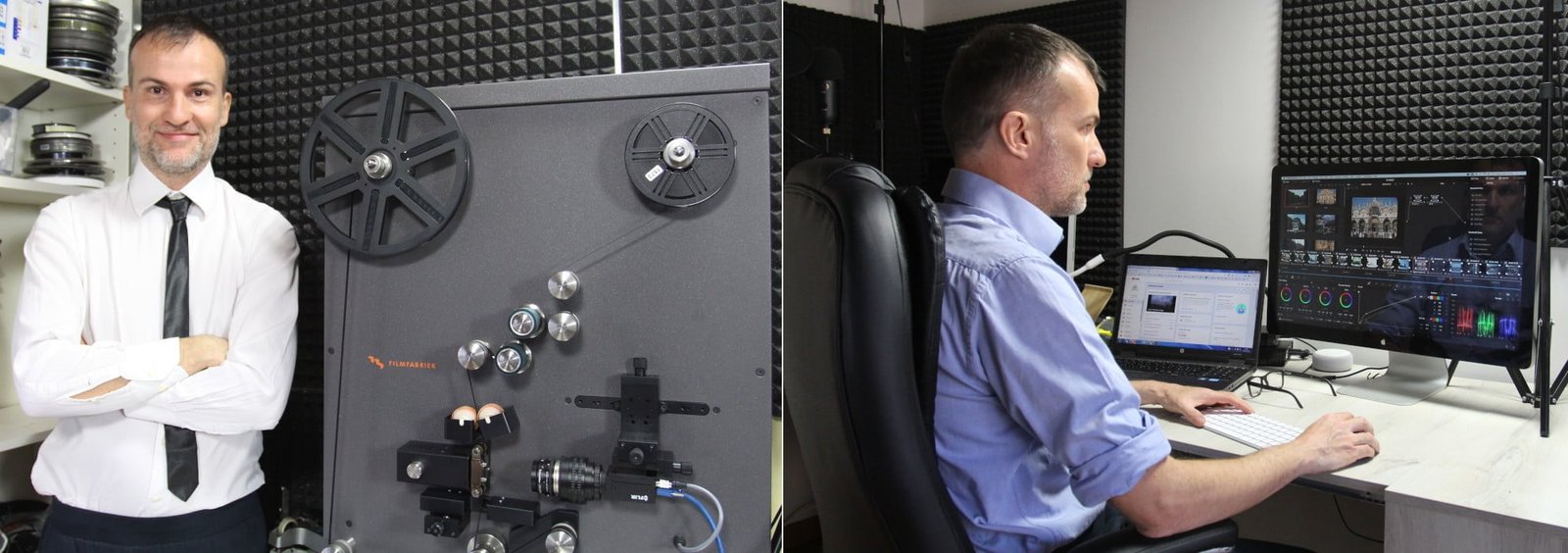
To prioritize quality, I purchased a state-of-the-art scanner. Unlike many major microstocks that are flooded with historical footage digitized using equipment costing just a few hundred dollars, I wanted to ensure that whether you’re an archive researcher working on the next 10-million-dollar documentary production or an 18-year-old student starting a filmmaking course, you have access to archive footage of the highest quality for your projects.
It’s essential to understand that the significance goes beyond image definition, sharpness and dust correction.
25 (real) frames per second
Today’s technology has provided us with the opportunity to achieve something that seemed impossible just a few years ago. Let me explain.
Modern videos typically have either 25 or 29.97 frames per second, whereas in the past, with 8, 9.5, and 16 mm films, footage was shot at 16, 18, or 24 fps. To address this discrepancy, I have learnt how to use software interpolation.
Take a look at this video: